This is a really hard blog to write.
Imagine your country has been in turmoil from neighbouring countries and then a ‘supposed’ saviour, fellow Cambodians (Khmer Rouge) comes along, promising hope for the future, except………”An attempt by Khmer Rouge leader Pol Pot to form a Communist peasant farming society resulted in the deaths of 25 percent of the country’s population from starvation, overwork and executions.
It’s impossible to cover the history of this topic in this blog in the detail and sensitivity it deserves. Suffice to say, this day was a very emotional journey and confusing to understand how this could have happened.
“All of Cambodia’s cities were then forcibly evacuated. At Phnom Penh, two million inhabitants were evacuated on foot into the countryside at gunpoint. As many as 20,000 died along the way.
Millions of Cambodians accustomed to city life were now forced into slave labor in Pol Pot’s “killing fields” where they soon began dying from overwork, malnutrition and disease, on a diet of one tin of rice (180 grams) per person every two days.”
“Throughout Cambodia, deadly purges were conducted to eliminate remnants of the “old society” – the educated, the wealthy, Buddhist monks, police, doctors, lawyers, teachers, and former government officials. Ex-soldiers were killed along with their wives and children. Anyone suspected of disloyalty to Pol Pot, including eventually many Khmer Rouge leaders, was shot or bludgeoned with an ax. “What is rotten must be removed,” a Khmer Rouge slogan proclaimed.”
http://www.historyplace.com/worldhistory/genocide/pol-pot.htm
I joined 4 other backpackers from Top Banana who were going to see the Killing Fields and we shared a Tuk Tuk for the day.
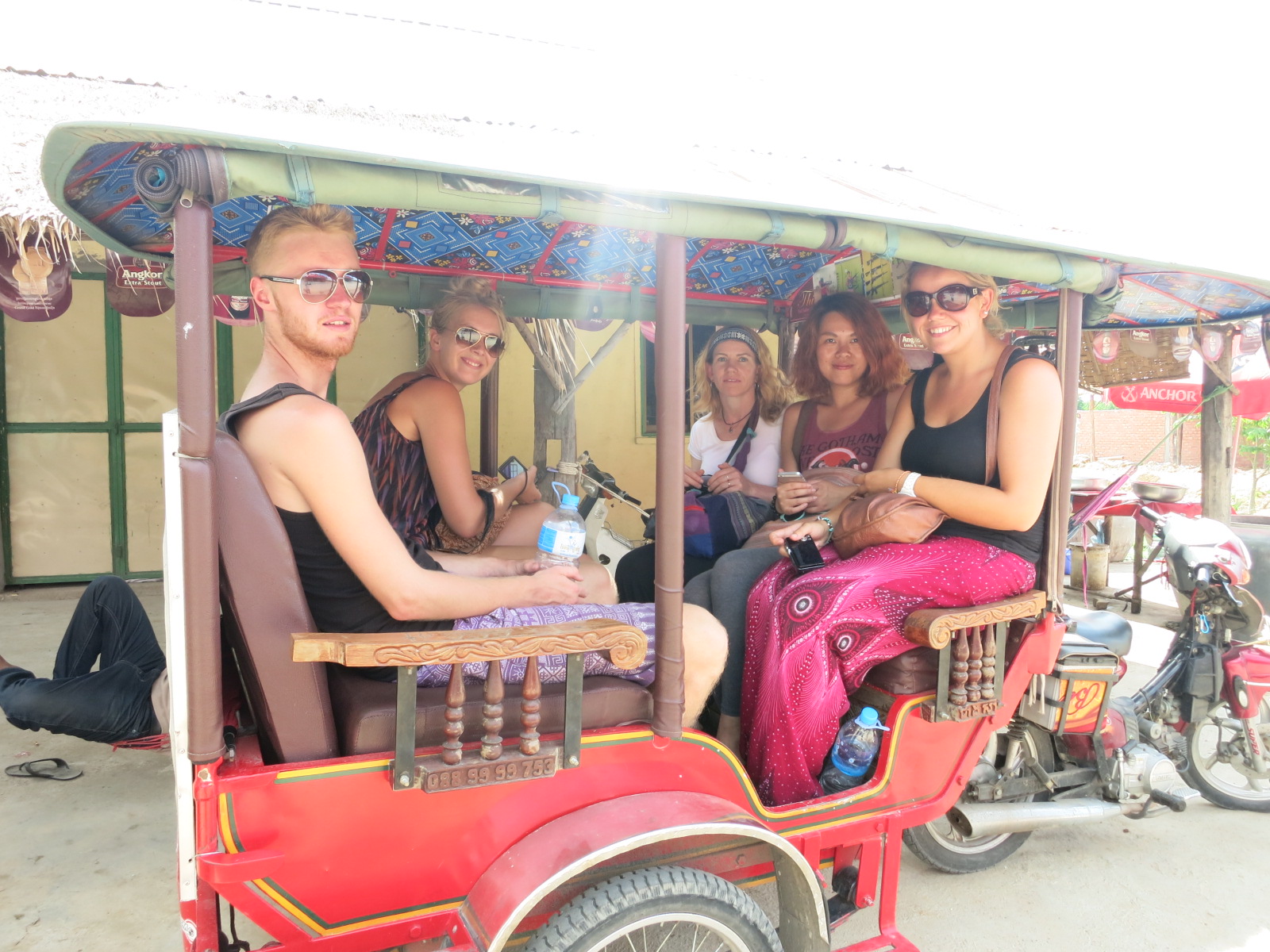
to Tuol Sleng Museum of Genocide and then The Killing Fields at Choeung Ek. I definitely recommend doing these places in this order.
Before you go though, definitely do your research. It has so much more meaning when you understand the history of what you are seeing.
Tuol Sleng Museum of Genocide (Tuol Sleng Prison)
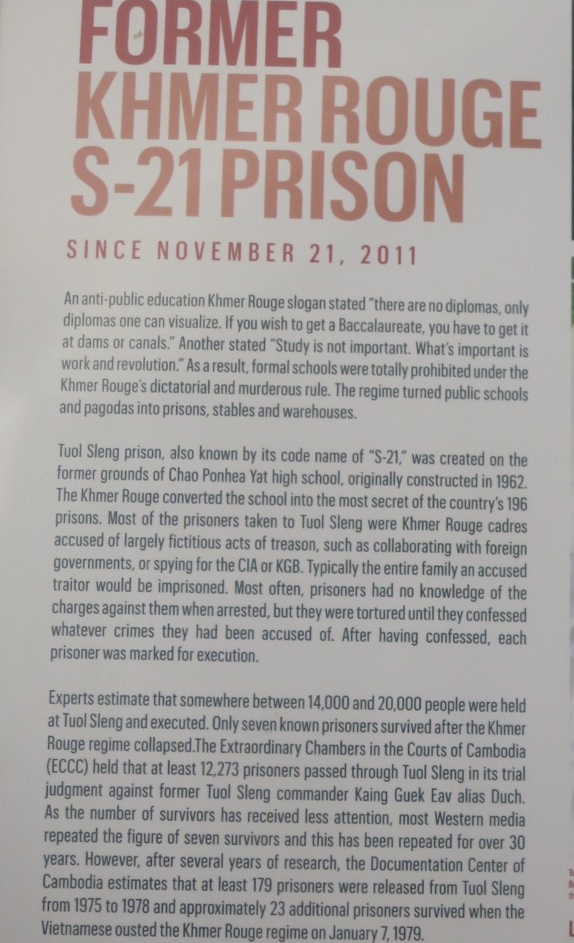
-
- Formerly an institution of learning, only to become a place of torture and death.
-
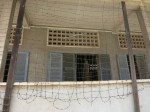
- The barbed wire prevented inmates from committing suicide by jumping over the balconies.
-
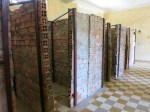
- These were the solitary confinement rooms.
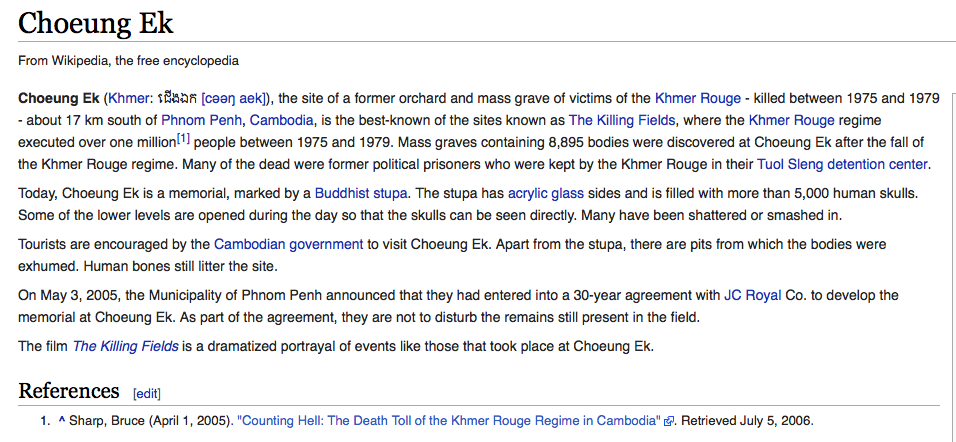
The Killing Fields at Choeung Ek
-
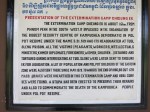
- About the camp.
-
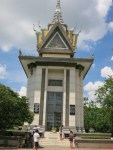
- Buddhist memorial dedicated to the memory of the victims.
-
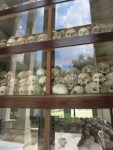
- Skulls recovered from the mass graves.
-
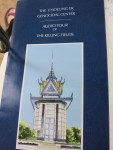
- The Audio tour was very detailed and informative.
-
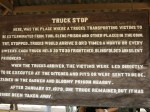
- I wonder how many people actually knew what was in store for them when they arrived here.
-
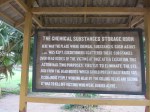
- Apparently music/communist announcements were also played very loudly to drown out the killing noises and not alert people in the area.
-

- Commonly, bones and clothing surface after heavy rainfalls due to the large number of bodies still buried in shallow mass graves.
-
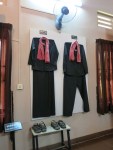
- The Pol Pot uniform. It’s probably not very culturally sensitive even in these days to wear a red scarf, black hat/clothes combination in Cambodia.
-
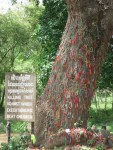
- “Chankiri Tree” or Killing Tree – Children and infants were smashed against this tree because their parents were accused of crimes against the Khmer Rouge. It was so the children “wouldn’t grow up and take revenge for their parents’ deaths”. Some of the soldiers laughed as they beat the children against the trees. Not to laugh could have indicated sympathy, making oneself a target.
Suffice to say, this was a very sombre day.
In the evening I took a stroll down the riverfront and checked out some tour options.


 kristiemylifemyrules